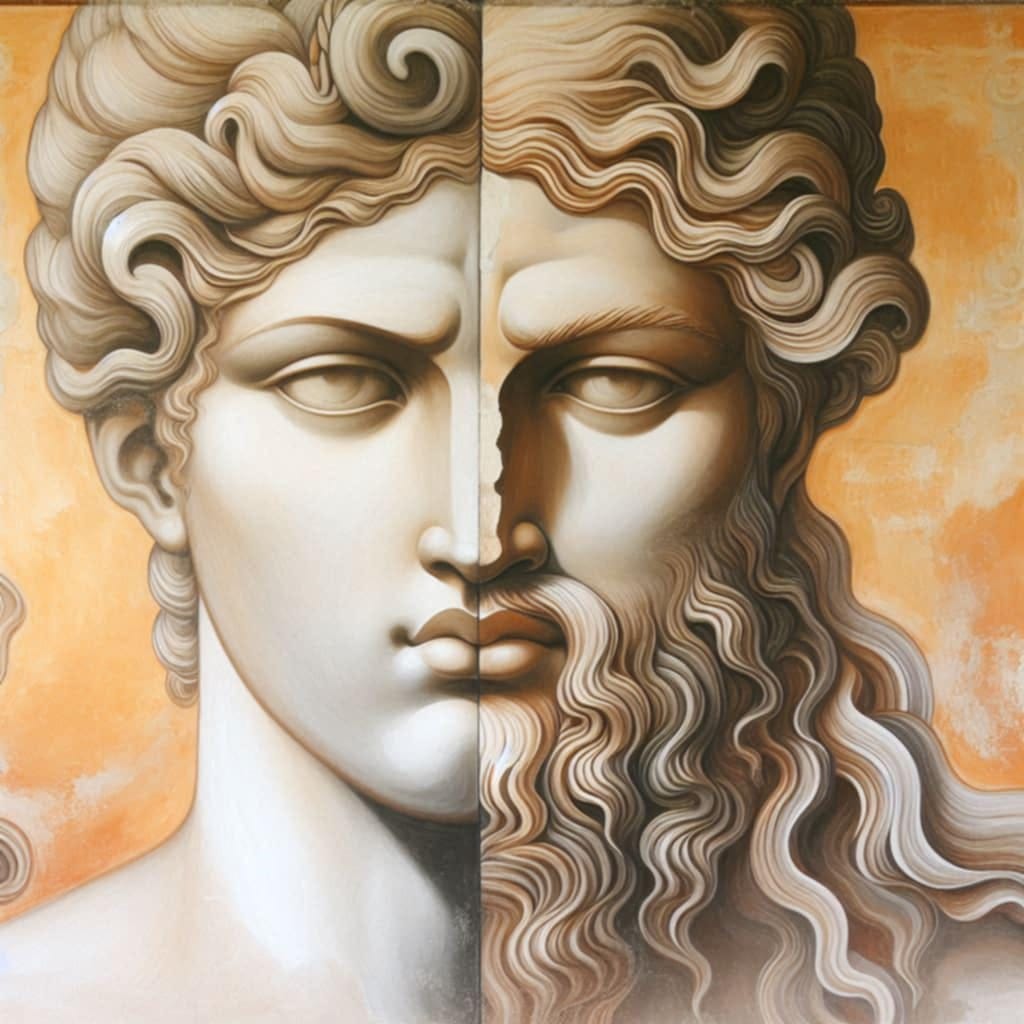
HERACLES/HERCULES
From Hero to Olympian

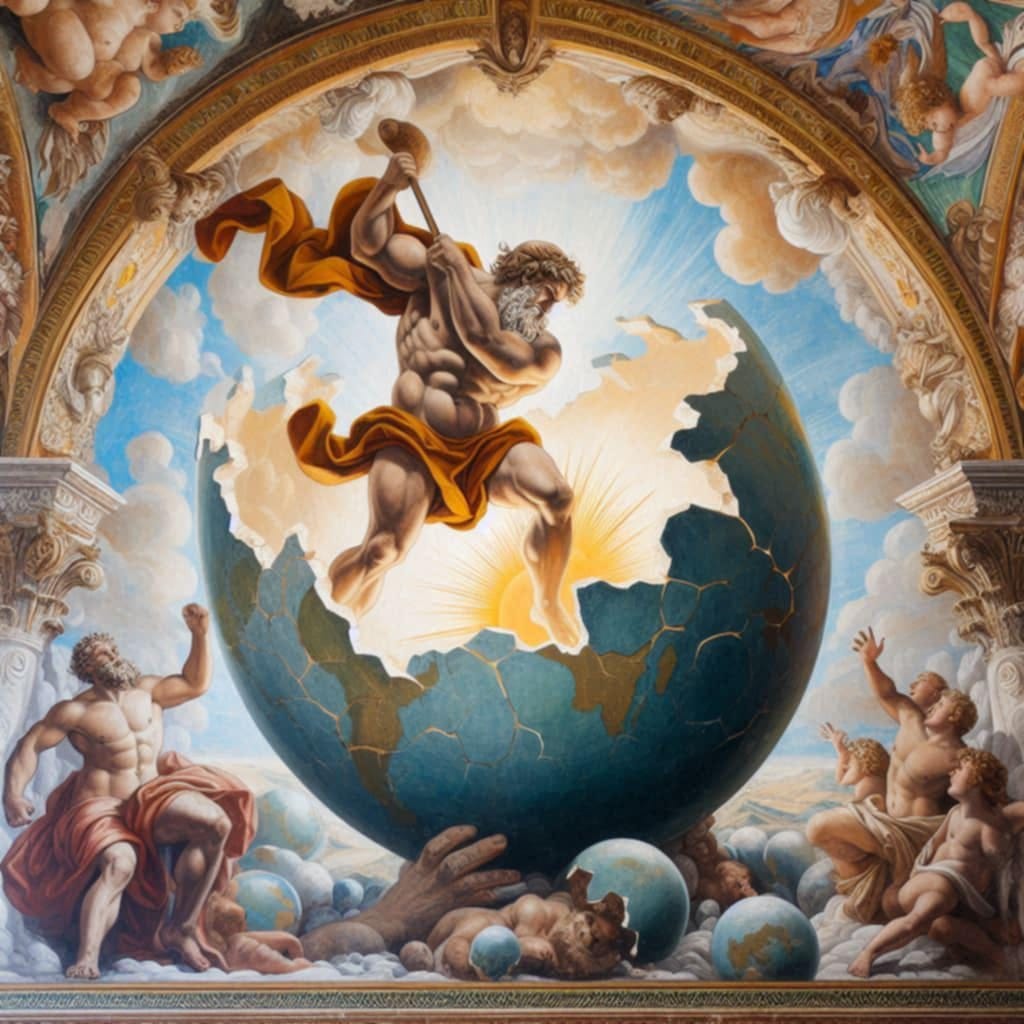
In Orphic mythology, Heracles (also known as Hercules) was associated with the World Egg in a very unique way. According to the myths, Heracles is the one who breaks the cosmic egg so that Eros may initiate the process of creation and procreation within the universe. This role of Heracles as the "Egg-Breaker" is significant in Orphic cosmogony, where he is seen as a primordial figure existing before his incarnation among humans.
In the context of the Orphic myths, the egg is described as being surrounded by a serpent, Ananke, symbolising necessity and inevitability. Once broken it is believed to have hatched Phanes/Protogonus, a hermaphroditic deity who created all other gods.
Within this cosmogony, the act of breaking the egg by Heracles is a metaphor for the ontological process by which the gods generate the cosmos, emphasising the continuous nature of creation rather than a single past event.
This mythological portrayal of Heracles as a primordial figure contrasts with his more commonly known heroic deeds, where he is celebrated for his twelve labors and other heroic feats.
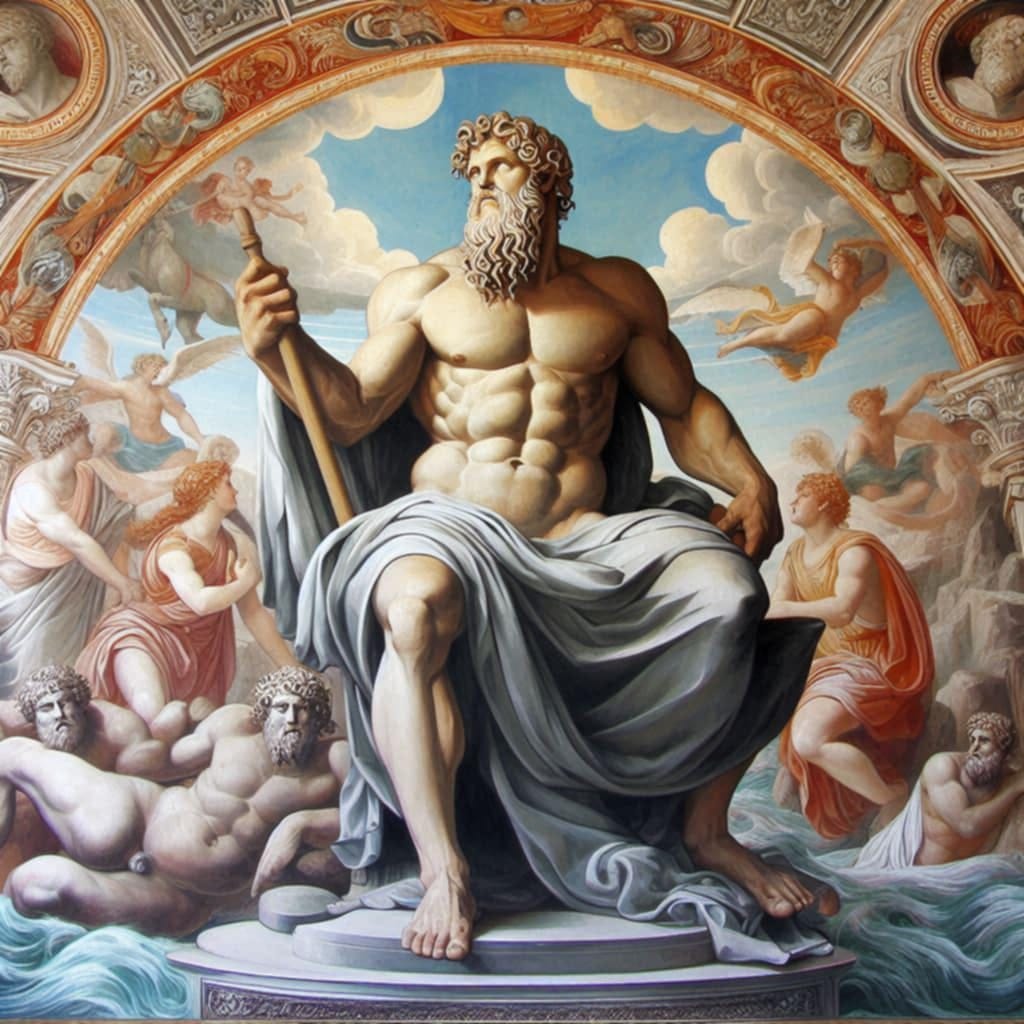
From the Homeric perspective Hercules was worshiped in both Greece and Rome for various reasons and through different practices. In Greece, Heracles was venerated as a divine hero, the son of Zeus and Alcmene, and the greatest of the Greek heroes. He was celebrated for his strength, courage, and the completion of the twelve Labours, which extended his heroic deeds and divine favor.
Alcmene was a mortal princess and Zeus disguised himself as her husband Amphitryon to seduce her. In the myth, Zeus took the form of Amphitryon and spent two days with Alcmena, which he made seem like a single day to take advantage of her. Due to Alcmena’s lineage as a mortal, Hercules was born with mixed blood, half human and half Olympian .
In Rome he was honored as a deity with distinctively Roman myths and practices. He was associated with the Aventine Hill through his son Aventinus and was considered a personal patron god by figures such as Mark Antony and the emperor Commodus. Hercules received various forms of religious veneration, including as a deity concerned with children and childbirth, partly due to myths about his precocious infancy and his numerous offspring. Roman brides wore a special belt tied with the "knot of Hercules," which was believed to be difficult to untie and thereby binding their wedding vows.
The cult of Heracles persisted in part because of his ascent to heaven and his suffering, which became the basis for festivals, rituals, and the organization of various mysteries. His ambiguous status as both hero and God allowed for a unique form of worship, where he was honored with sacrifices first as a human and finally as a God within the same festival.
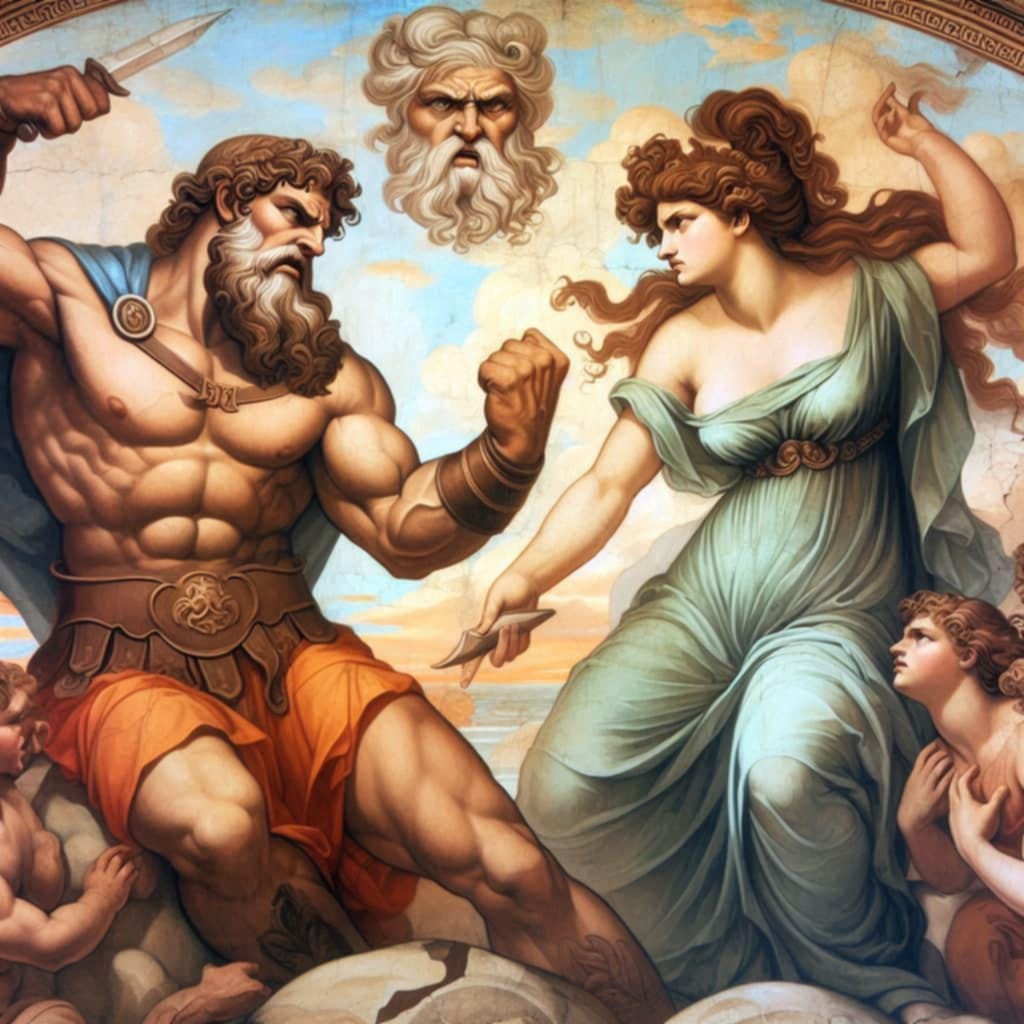
It is well understood that Hercules had a remarkable amount of power and strength.
To this day, that is the first thing that people remember about him. However, it is this very strength that Hera eventually caused Hercules to use against himself, in a fit of rage at Zeus sleeping with Alcmene. After Hercules was married and had a son, Hera caused him to go temporarily insane. He was confused and angry, and as a result of this, killed both his wife and child. Part of his punishment is that the insanity was temporary. When his sanity returned and he was fully aware of what he had done and was filled with regret and remorse. He traveled to the Oracle at Delphi in order to inquire how he could atone for the sin of killing his family.
He was told to perform the 12 Labors to atone for the guilt and advised to serve King Eurystheus for twelve years and complete whatever tasks Eurystheus might set him as a form of penance.
These labors were designed to be extremely difficult and were intended by Hera to be impossible, reflecting her ongoing hatred towards Hercules due to his parentage as Zeus's illegitimate son. By completing these tasks, Hercules aimed to redeem himself and seek forgiveness for his past actions.
Each labor represented a significant challenge that tested Hercules's physical strength, cunning, and perseverance. The tasks ranged from slaying the Nemean Lion to cleaning the Augean stables and capturing Cerberus from the Underworld. Completing these labors was a way for Hercules to demonstrate his heroic qualities and ultimately achieve Godhead.
Little known, is that the 12 labors of Hercules can be associated with the 12 signs of the zodiac. Each labor can be linked to a specific zodiac sign, reflecting a journey through the constellations and act as a psychopomp drama, transforming base desire and reactions into refinement, courage, wit, strength and ultimately immortality.
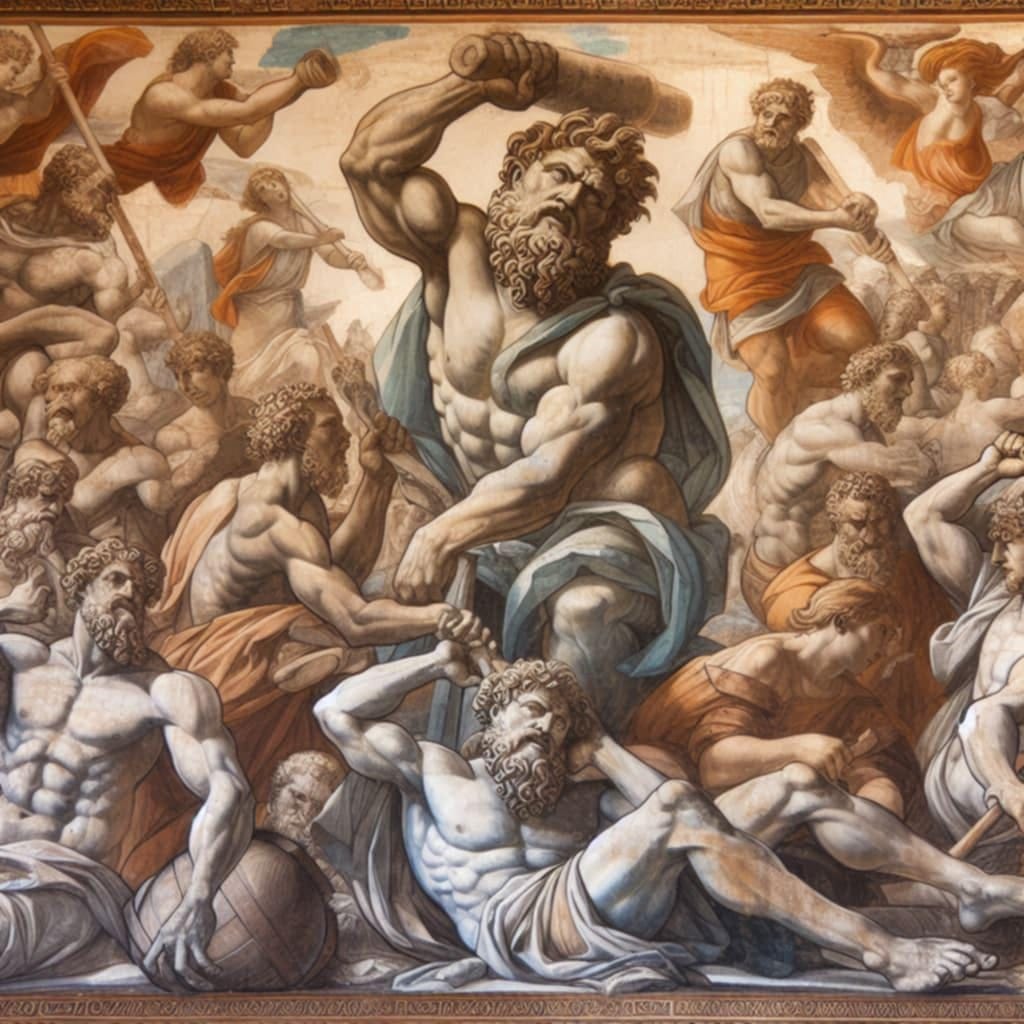
HERCULES 12 LABOURS
LEO
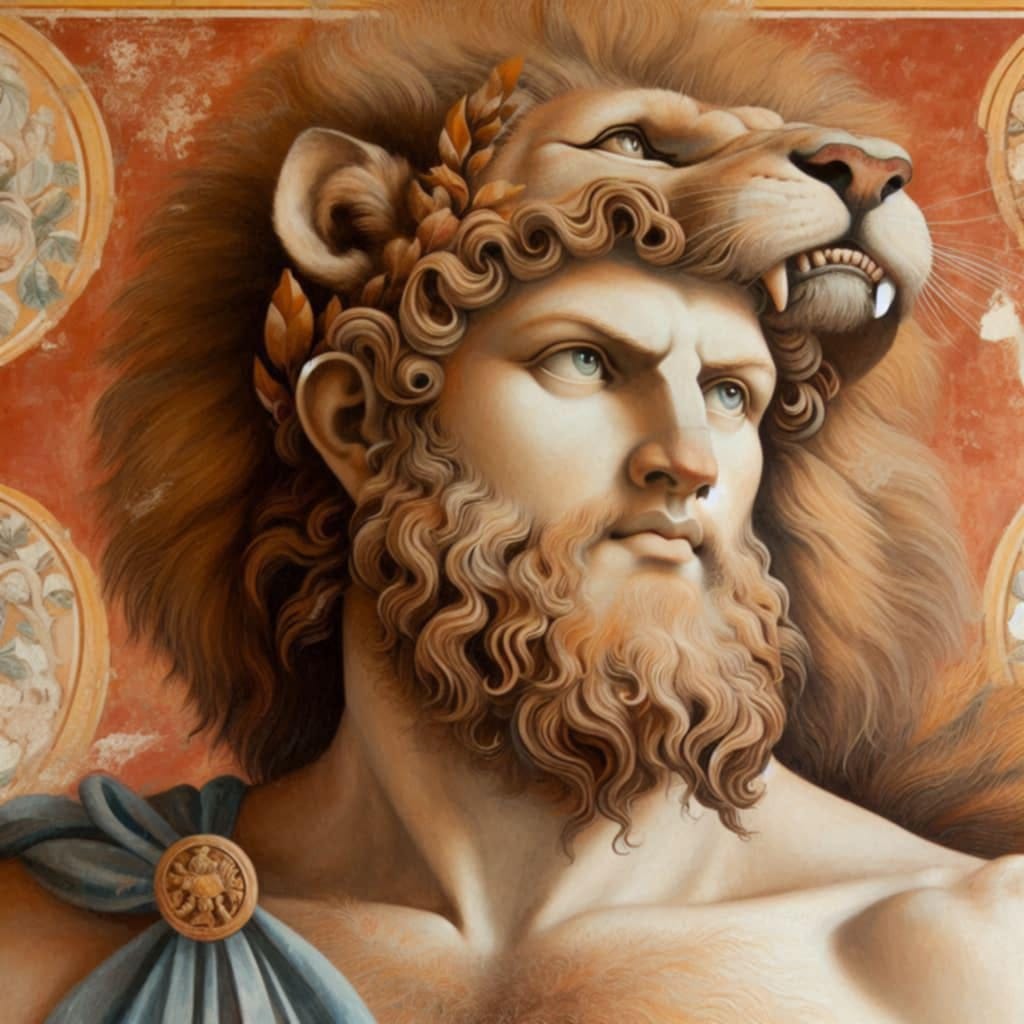
1. The Nemean Lion: Hercules’ first labor involved defeating the invulnerable Nemean Lion. This symbolizes conquering the ego, the formidable beast within each person that must be tamed before any spiritual progress can be made.
CANCER
2. The Lernaean Hydra: The Hydra, a many-headed serpent, symbolizes the multiple facets of the human mind. The labor signifies the need to overcome negative thoughts, desires, and distractions that hinder one’s spiritual path.
CAPRICORN
3. The Ceryneian Hind: Capturing the Hind of Ceryneia, a sacred deer, represents the pursuit of spiritual truth. In esoteric terms, it symbolizes the journey to attain inner knowledge and enlightenment.
VIRGO
4. The Erymanthian Boar: The capture of the Erymanthian Boar is akin to confronting the lower animalistic instincts within oneself. It illustrates the need to subdue and transform base desires into higher, more refined qualities.
AQUARIUS
5. The Augean Stables: Cleansing the Augean Stables is a metaphor for purifying the impurities of the soul. This labor highlights the importance of inner purification and self-purging to reveal one’s true self.
SAGITTARIUS
6. The Stymphalian Birds: Herding the Stymphalian Birds represents the control of scattered thoughts and emotions. The task is to regain mental focus and clarity, key to spiritual growth.
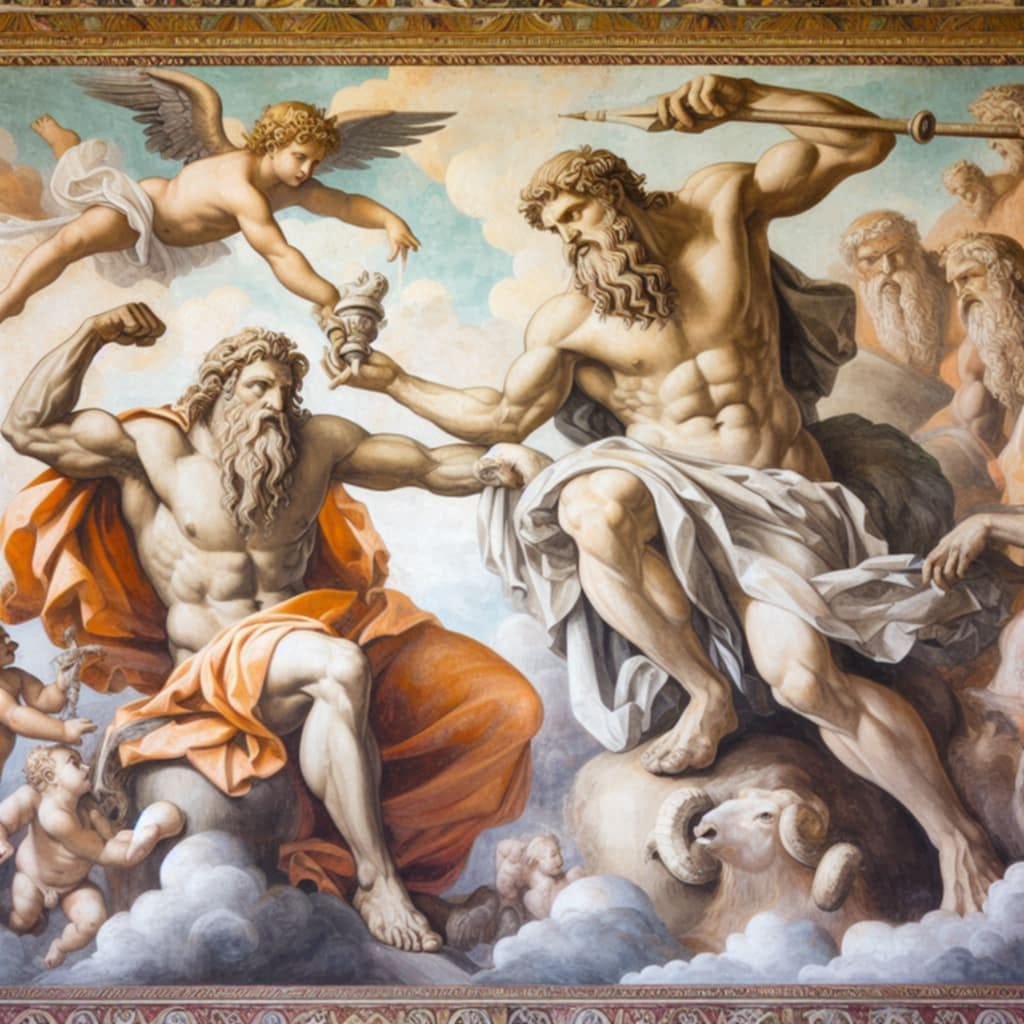
AQUARIUS
7. The Cretan Bull: Subduing the Cretan Bull signifies conquering the animalistic instincts. It teaches the transformation of primal urges into spiritual ascension.
LIBRA
8. The Mares of Diomedes: Taming the man-eating Mares of Diomedes reflects the mastery of one’s passions. To attain spiritual growth, one must harness and redirect these powerful forces, to maintain harmony and balance
ARIES
9. The Belt of Hippolyta: Obtaining the Belt of Hippolyta, the Amazon Queen, symbolizes the acquisition of spiritual power. In the esoteric sense, it represents the union of the inner masculine and feminine aspects to achieve inner harmony and immortality.
TAURUS
10. The Cattle of Geryon: Hercules’ journey to retrieve the Cattle of Geryon is a representation of the integration of the Higher Self, the Middle Self, and the Lower Self. This union is a crucial aspect of the Mystery Traditions.
PISCES
11. The Apples of the Hesperides: This labor revolves around stealing the golden apples of immortality from the Hesperides. It signifies the quest for eternal life or spiritual immortality through the pursuit of wisdom and inner transformation.
SCORPIO
12. Cerberus: The final labor, capturing Cerberus, the three-headed dog guarding the entrance to the Underworld, symbolizes conquering the death itself and transcending the cycle of rebirth. It is the ultimate victory of the soul’s journey and the final labor to immortality
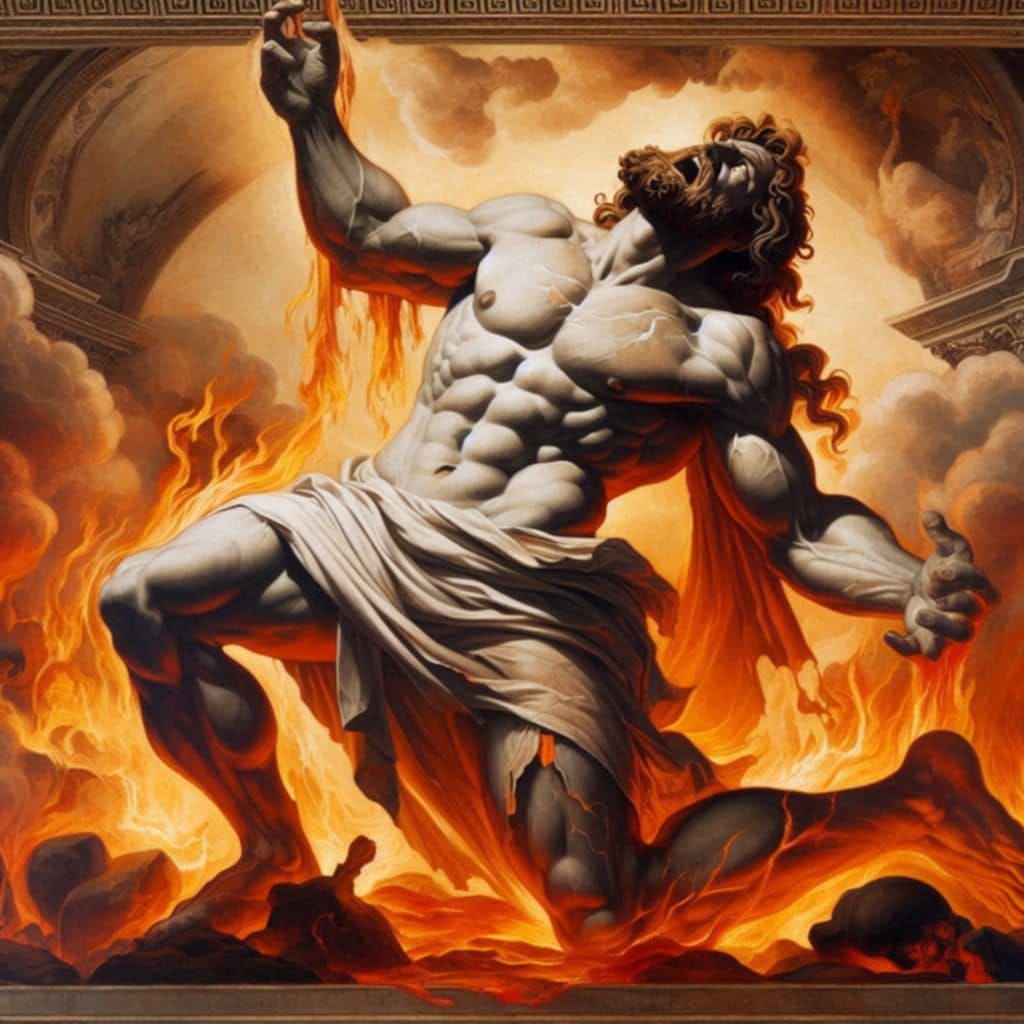
After completing the twelve labors’s, Hercules married Deianira, the daughter of King Oeneus of Calydon. However, their marriage led to his demise. Deianira, fearing that Hercules might leave her for another woman, used a tunic that had been treated with the blood of the centaur Nessus, that was poisoned with the venom of the Hydra. When Hercules wore the tunic, the poison burned his skin, causing him immense pain. In his agony, he built a funeral pyre and threw himself upon it, ending his mortal life.Upon his death, and transition into the spiritual realm Hercules was taken to Mount Olympus by Athena, where he was welcomed among the gods and granted immortality amongst them.
From these insights whenever Hercules shows up as an ancient. archetype in our lives, it is guaranteed to be a testing time of agility and skill, a time of taming the primal elements within ourselves, transforming them through trial and error, with wit, skill and wisdom. Specifically, the primal masculine power must learn to honor and respect the divine feminine/goddess, and from this an alchemical transformation can occur, from a once mortal human being into an immortal Olympian.
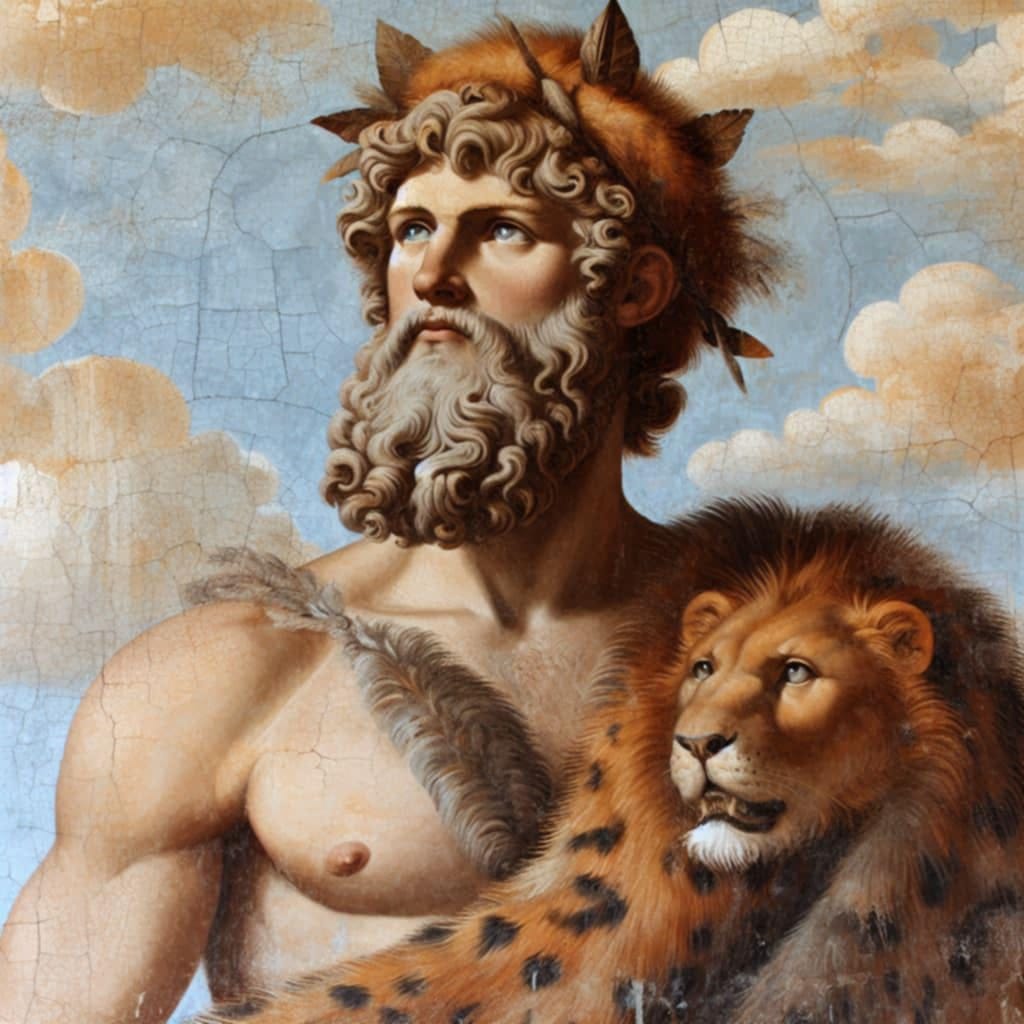
HOMERIC HYMN TO HERACLES
I will sing of Heracles, the son of Zeus and much the mightiest of men on earth. Alcmena bare him in Thebes, the city of lovely dances, when the dark-clouded Son of Cronos had lain with her. Once he used to wander over unmeasured tracts of land and sea at the bidding of King Eurystheus, and himself did many deeds of violence and endured many; but now he lives happily in the glorious home of snowy Olympus and has neat-ankled Hebe for his wife. Hail, lord, son of Zeus!
Give us success to prosper.
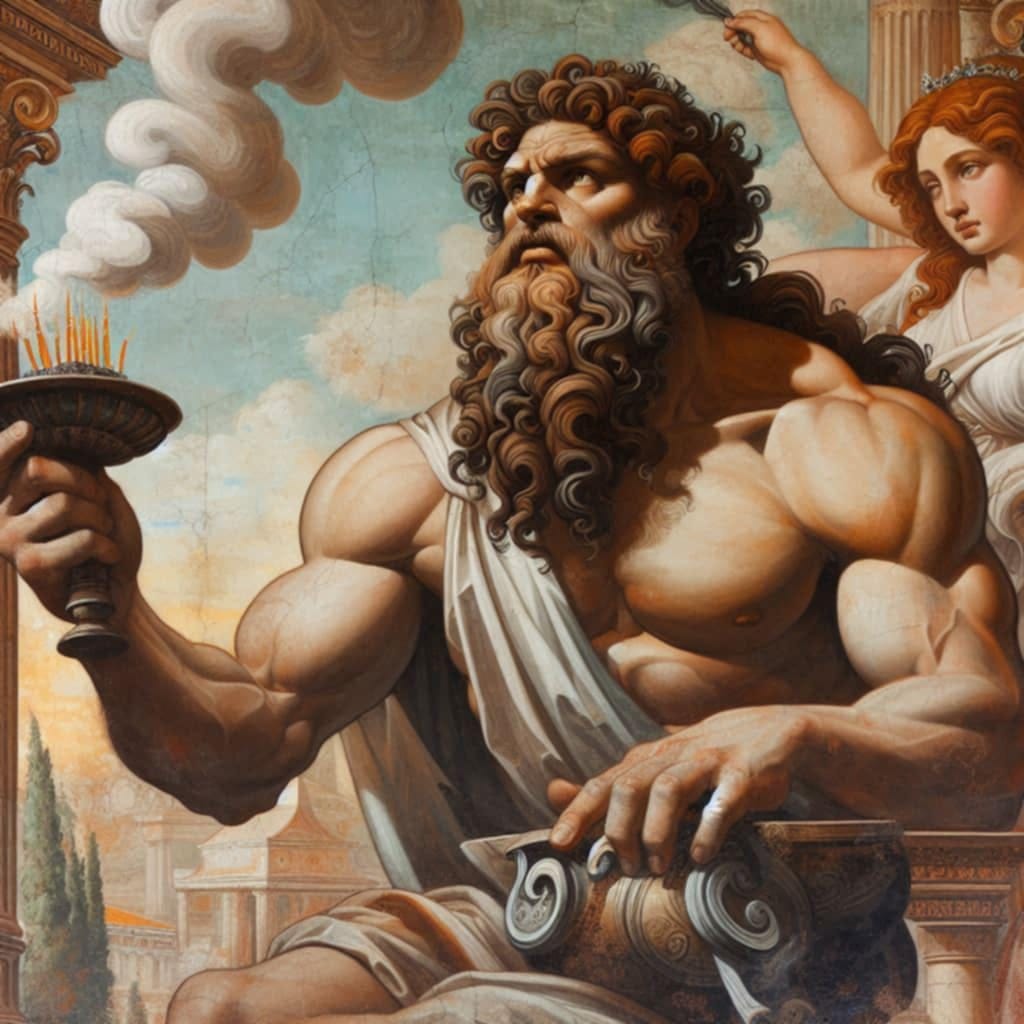
ORPHIC HYMN TO HERAKLES
Hear, powerful, Herakles untamed and strong, to whom vast hands, and mighty works belong,
Almighty Titan, prudent and benign, of various forms, eternal and divine,
Father of Time, the theme of general praise, ineffable, adored in various ways.
Magnanimous, in divination skilled and in the athletic labors of the field.
‘Tis yours, strong archer, all things to devour, supreme, all-helping, all-producing power;
To you mankind as their deliverer pray, whose arm can chase the savage tribes away:
Unwearied, earth’s best blossom, offspring fair, to whom calm peace, and peaceful works are dear.
Self-born, with primogenial fires you shine, and various names and strength of heart are yours.
Your mighty head supports the morning light, and bears untamed, the silent gloomy night;
From east to west imbued with strength divine, twelve glorious labors to absolve were yours;
Supremely skilled, you reign in heaven’s abodes, yourself a God amidst the immortal Gods.
With arms unshaken, infinite, divine, come, blessed power, and to our rites incline;
The mitigations of disease convey, and drive disastrous maladies away.
Come, shake the branch with your almighty arm, dismiss your darts and noxious fate disarm.